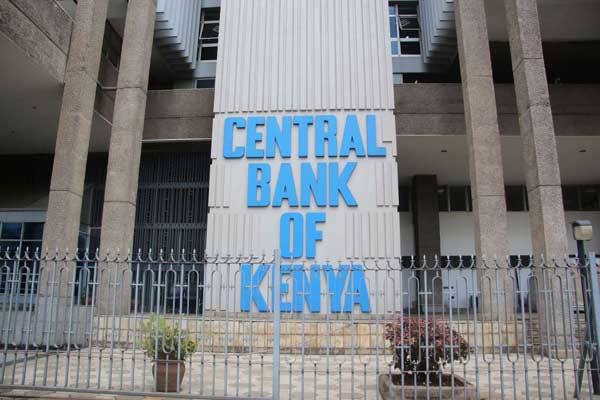
The Central Bank of Kenya (CBK) has issued a public warning against the misuse of Kenya Shilling banknotes for decorative and celebratory purposes, citing damage to currency integrity, operational disruptions, and potential legal consequences.
In a press release dated February 2, 2026, the Bank said it has observed a “growing trend in the use of Kenya Shilling banknotes for decorative and celebratory purposes,” including cash flower bouquets, ornamental displays, and similar arrangements.
CBK cautioned that such practices often involve folding, rolling, gluing, taping, stapling or pinning banknotes, actions that compromise their integrity and render them unfit for circulation.
“Such practices compromise the integrity of Kenya Shilling banknotes and render them unsuitable for circulation,” the Bank said.
According to CBK, damaged notes interfere with the efficient operation of cash-handling and processing equipment, including automated teller machines (ATMs), cash counting machines, and sorting equipment.
This results in higher rejection rates during processing and leads to the premature withdrawal and replacement of currency.
“This leads to the premature withdrawal and replacement of currency, at an avoidable cost to the public and the Bank,” CBK noted, warning that the financial burden ultimately affects taxpayers and currency users.
While the Bank clarified that it does not object to the use of cash as a gift, it stressed that currency should not be subjected to any action that alters, damages or defaces it.
“Currency should remain in a condition that allows it to circulate freely and perform its intended functions as a medium of exchange, unit of account, and store of value,” the statement said.
CBK further reminded the public of the legal implications of damaging banknotes. Citing Section 367 of the Penal Code (Cap. 63, Laws of Kenya), the Bank noted that the law prohibits the defacement, mutilation or impairment of currency notes.
“Any person who wilfully defaces, mutilates, or in any way impairs any currency note issued by lawful authority commits an offence under the Penal Code,” CBK warned.
The Bank urged Kenyans to refrain from practices that compromise the integrity of the national currency and instead adopt alternative, non-damaging methods when presenting monetary gifts.
“The Central Bank of Kenya remains committed to safeguarding the integrity of the national currency in circulation,” the statement said, adding that it will continue public sensitisation and stakeholder engagement efforts to protect the quality, usability and public confidence in Kenya Shilling banknotes.
The advisory comes amid increasing popularity of elaborate cash displays at weddings, graduations and other celebrations, a trend CBK says poses avoidable risks to the currency and the broader cash-handling system.































Comments
Sign in with Google to comment, reply, and like comments.
Continue with Google